
1. Introduction to the BPA Business Competition
The BPA Business All-Round Challenge holds official accreditation from the U.S. Department of Education (USED) and the Career and Technical Student Organizations (CTSO); furthermore, it is endorsed by the National Association of Secondary School Principals (NASSP) and stands as a leading global academic competition in business studies for secondary school students.
In China, BPA has been active for less than three years. Consequently, for domestic high school students, it remains a relatively unfamiliar competition. However, this also implies that the current probability of winning in BPA is significantly higher than that of participating in competitions such as FBLA or WGHS. According to statistical data, the current success rate in the preliminary rounds of BPA China reaches as high as 60%, while the advancement rate to the global finals exceeds 25%.
The SKT-CBPA Future Business Leaders Workshop (SKT-China Business Professional Alliance)—formerly known as SKT-BPA—has now been upgraded into a more influential and comprehensive practical study program focused on all-around business proficiency.
2. Schedule
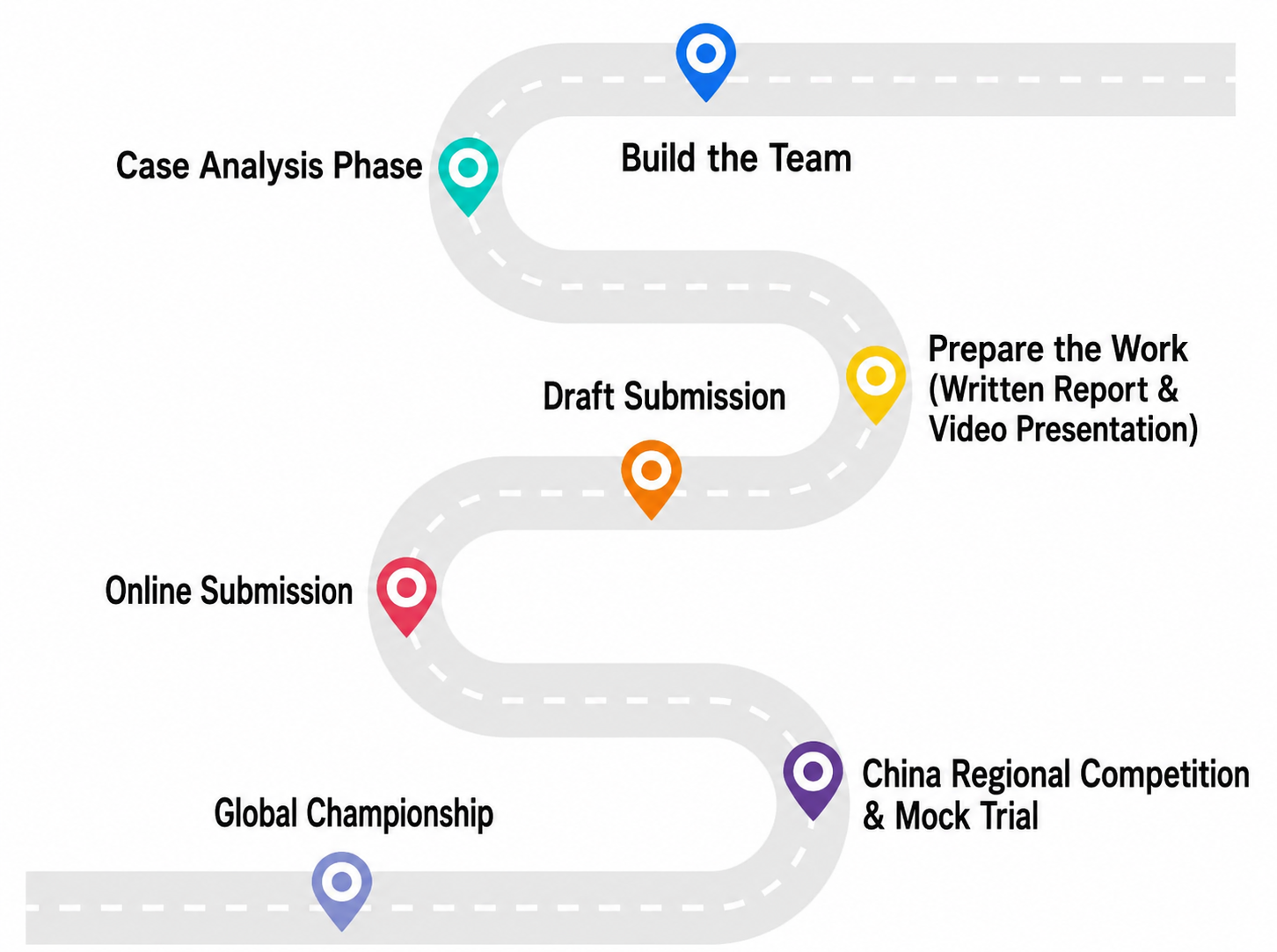
The CBPA competition consists of preliminary rounds, regional rounds (China round), and the global round. The detailed schedules for each stage are as follows:
CBPA Registration Period:
June 12 – December 6, 2026
Preliminary Round:
Submission of entries (Practical Track): December 20, 2026
Online assessment (Academic Track): Tentatively scheduled
Location: Online
*Within each region, the top 20% of teams in each category may advance directly to the "CBPA 2027 China Finals."
*For teams that do not advance directly, the top 20% nationwide may advance to the "CBPA 2027 China Finals."
Regional Station (China Station):
Time: February–March 2027
Location: To be announced
Global Site:
United States
Denver, Colorado: May 2027
Singapore
Singapore: May–August 2027
United Kingdom
University of Oxford: July–August 2027
Asia
Hong Kong, China: August 2027
3. Competition Process
4. CBPA Business Competition Categories
Participation is open to individuals or teams. Teams may be formed across different schools, grade levels, and regions, but not across different competition categories.
[Academic-Based Division]
Applicable Grades: 9–12
Participation Format: Individual
Target Audience: Students with a nascent interest in business who wish to acquire foundational business knowledge in a systematic manner, bridge the gap to university-level coursework, gain authoritative academic recognition, and—through exploration of various specialized business fields—identify their future academic and professional career paths at an early stage.
The Academic-Based Division features objective-style assessments based on two distinct tracks; students may select either of the following options:
① Marketing
Assessment of fundamental marketing knowledge.
Content covers: Brand Marketing, Advertising Media, E-commerce, etc.
② Business Management
Exploration and study of the operational dynamics of the business world.
Content covers: Human Resource Management, Corporate Financial Management, etc.
【Project-Based Division (Subjective)】
Division Overview: The Project-Based Division centers on a team-based business pitch assessment. Team members collaborate by assuming various business roles to analyze the thematic case study of the CBPA season. Their objective is to develop a comprehensive business proposal, ultimately presenting their research findings and analysis through a formal presentation.
Eligible Grades: Grades 6–12
ML: Grades 6–9 / S: Grades 9–12
Team Formation: Team participation (3–4 members per team)
*Note: The task difficulty in the ML Division is lower than that in the S Division.
Target Audience: Students with a strong interest in business studies who excel at teamwork, are eager to gain hands-on business experience, are open to exploring diverse life paths, and prioritize the development of fundamental, interdisciplinary competencies.
| Group | grade | Participation Methods | Assessment Content |
| Project-Based Division |
ML:G6-9 |
Team (3–4 people) |
We select business themes that closely align with current trends and resonate with students' daily lives. Official case studies—tailored to the annual theme—are released, requiring teams to formulate comprehensive business plans based on the provided content. The case-based framework incorporates practical tasks designed to immerse students in the authentic business world, offering a highly realistic simulation of real-world commercial environments. (Case studies to be released.) *Note: The difficulty level of tasks for the IMI category is lower than that for the S category. |
|
S:G9-12 |
|||
| Academic-Based Division |
G9-12 |
personal |
Choose one track: Marketing or Business Management. 【Marketing】 Assessment of fundamental marketing knowledge. Topics covered include: Brand Marketing, Advertising Media, E-commerce, etc. 【Business Management】 Exploration and study of the operating principles of the business world. Topics covered include: Human Resource Management, Corporate Financial Management, etc. |
5. CBPA Scoring Rules
[Objective Individual] Category
I. The Objective Individual category is divided into two assessment tracks: [Objective Individual – Marketing] and [Objective Individual – Business Management].
II. The assessment method for the Preliminary Round of the Objective Individual category consists of an online objective test. The allotted time for the exam is 60 minutes, comprising a total of 80 multiple-choice questions. Each correct answer is awarded 5 points; incorrect answers or unanswered questions receive neither points nor deductions. The maximum total score is 400 points.
III. Participating students are required to complete the 80 questions individually within the designated time frame; their final score will be recorded as their official result.
IV. The Organizing Committee will schedule two separate assessment sessions; participating students may select one of these sessions to attend based on their own personal schedules.
[Subjective Team] Category
I. The Subjective Team category will directly adopt the five major subject themes from the Global Round as the assessment topics for the National Preliminary Round. Each team must select one of these themes to participate.
II. Students participating in the Subjective Team category must submit a thematic presentation video—based on the selected theme and specific requirements—prior to the video submission deadline.
[Business+] Category
I. (For students interested in Information Technology or Art & Design) Detailed information regarding the Global Station subject tracks will be provided directly. Based on the specific requirements of each subject, participants may choose to compete either individually or as a team (comprising 3–4 members). Students wishing to participate in the "Business+" track must submit a formal application for the Global Station Summit subjects prior to the designated deadline; this application must include relevant academic transcripts, details of extracurricular activities, records of awards and challenges, a portfolio of creative works, and other pertinent materials.
II. Students participating in the "Business+" track are required to submit their applications by the specified deadline for the "Business+" subject track. Admissions will be processed on a rolling basis—accepted applicants will be confirmed as their applications are reviewed—and will continue until all available spots are filled (allocated on a first-come, first-served basis).
6. CBPA Advancement Rules
① Direct Advancement
Based on the overall score rankings within each region, the top 20% of individuals or teams in each category will directly advance to the CBPA China Station Study Phase. The actual number of advancing individuals/teams will be determined based on the actual number of participants/teams in that specific year.
② Second-Round Advancement
For individuals or teams that did not qualify for direct advancement, a nationwide overall score ranking will be conducted; the top 20% of these teams will then advance to the China Station. The number of individuals/teams advancing in this second round shall not exceed the number of individuals/teams that qualified through direct advancement.
7. CBPA Award Categories
▶ Official Certificate of Participation
Every student participating in the CBPA through SKT will receive an official CBPA Certificate of Participation; students demonstrating outstanding performance may receive a CBPA Certificate of Honor for Academic Excellence in Business.
▶ National Overall Awards
Scores from all divisions across the Chinese preliminary stations will be ranked. Gold, Silver, and Bronze awards will be allocated based on the proportional distribution of participating students, and corresponding award certificates will be issued.
▶ Regional Excellence Awards
Excluding those who have already received National Overall Awards, teams from the Chinese preliminary stations will be ranked by division and region. Gold, Silver, and Bronze awards will be allocated based on the proportional distribution of participating teams, and corresponding award certificates will be issued.
CBPA Examination Content
Scope of the China Site Visit
In addition to the classic academic challenges, the 2027 event season introduces "BONUS" challenge missions.
(1) Practical Application Category
Business Case Challenge: Broken down into four key tasks; completing each task earns up to 5 bonus points (maximum 20 points total), which count toward the preliminary round's final score.
Business Prototype Design: Transform product concepts into physical models using materials like cardstock or clay, or via AI tools; earn the exclusive "Designer of the Year" honor.
(2) Academic Category
Knowledge Module Challenge: Conducted as unit tests (online proctoring; scheduled monthly). Scoring ≥90 points per unit earns 5 "functional points" (up to 20 points across four units) and unlocks an exclusive academic honor.
Monthly Leaderboard Challenge: Three rounds held monthly. Features randomized questions from a bank, time limits, and online proctoring. Ranking in the top 10% with a score of ≥90 points in a round earns 5 bonus points (maximum 15 points). Ranking in the top 10% with a score of ≥90 points across all three consecutive rounds grants direct advancement to the China National Round.
Junior High School Division (Grades 7–9)
Participation: Individual or Team (3 members)
Assessment Method: Objective-type test
Skills Assessed: Focuses on a rapid overview of fundamental business, economic, and financial concepts, as well as familiarity with business frameworks. Content covers introductory economics, basic business law, introductory management, introductory finance, introductory marketing, and related topics. The objective test will cover these areas through a comprehensive assessment.
High School Division (Grades 10–12)
Participation: Individual
Assessment Method: Objective test
Competency Assessment:Objective assessments will be conducted based on two major tracks; students may choose any one of the following subject tracks:
1. Marketing: Focuses on fundamental marketing concepts, covering topics such as brand marketing, market segmentation, advertising media, and e-commerce.
2. Business Management: Covers knowledge of multinational business operations, human resource management, corporate financial management, and the optimization of management decisions.
Participation format: Team (3 members)
Evaluation method: Subjective assessment (submission of a presentation video)
Competencies assessed:Five specific topics from the Global Round are designated as themes for the Regional Round assessment; students may choose any one of the following topics:
1. Small Business Management
2. Economics Research
3. Business Presentations and Q&A
4. Global Marketing
5. Financial Analysis Strategies
Students demonstrate their communication and presentation skills—and are comprehensively assessed on their business knowledge—by showcasing creative business proposals and developing projects such as global marketing plans, business consulting solutions, financial strategies, and economic research reports.
Participation: Individual or Team (3 members)
Assessment Method: "BusinessPlus" Application
Competencies Evaluated: Proficiency in business-related digital design (photography, animation, game design, web development, video editing, new media operations, etc.) or information technology (computer programming, etc.), benchmarked against professional industry certifications such as Microsoft Technology Associate (MTA). Students apply for the corresponding subject tracks at the global stage by submitting academic records (in arts, computer science, etc.), extracurricular activity details, awards, and portfolios.
Expanded Themes (Four Categories): AI-Native, ACG (Anime, Comics, and Games) Consumption, Trendy Sports, and Open Topic.
Scope of the Global Battle Assessment
Junior High Division (Grades 7–9)
Participation: Individual
Category: Digital Design
Global Finals Event: Graphic Design Promotion
Participation: Individual
Category: Business
Global Finals Events: Financial Literacy, Entrepreneurship Exploration, Extemporaneous Speech, Presentation Management
Participation: Team (3 members)
Categories: Business, Digital Design
Global Finals Events: Prepared Speech, Introduction to Video Production
High School Division (Grades 10–12)
Participation: Individual
Subject Area: Information Technology
Global Round Subjects: Java Programming, SQL Database Fundamentals, Python Programming
Participation: Individual
Subject Area: Digital Design
Global Round Subject: Graphic Design Promotion
Participation: Individual
Subject Area: Business
Global Round Subjects: Fundamental Accounting, Banking & Finance, Human Resource Management, Entrepreneurship
Participation: Team
Subject Area: Digital Design
Global Round Subjects: Video Production, Computer Animation, Graphic Design Promotion
Participation: Team (3 members)
Subject Area: Business
Global Round Subjects: Financial Analyst, Economic Research, Small Business Management, Global Marketing