
BPA (Business Professionals of America) is a globally renowned business competition for high school students. It is divided into two main categories: the Objective Individual Group and the Subjective Team Group, covering students from middle school through high school.
I. Category Overview: How to Choose the Right Track for You?
Subjective Team Group (CBPA Subjective Group)
Requires 3–4 members per team. It is subdivided into three sub-categories based on grade level and language requirements:
| Category | Grade Level | Language | Can Advance to Global Finals? | Key Features |
|---|---|---|---|---|
| ML Junior Group (New) | Grades 6–9 | Chinese | ❌ No | Lowest difficulty; ideal for beginners |
| S-Pre High School Bilingual Group | Grades 9–12 | Chinese/English Bilingual | ❌ No | Moderate difficulty; transitional category |
| S-Classic High School Classic Group (New) | Grades 9–12 | English | ✅ Yes | Unrestricted topics; options include pet-themed or self-selected topics; highest value |
Assessment Process:
- Preliminary Round: Business case analysis (produce a business plan) + 10-minute presentation.
- China Station: On-site participation, including business pitch, City Partner, Venture Lab, Tea Talks, and more.
- Global Station: Research assessments, academic evaluations, U20 Youth Voice, and more.
Objective Individual Group (CBPA Objective Group)
Individual participation, suitable for students in grades 9–12.
| Item | Details |
|---|---|
| Participation Format | Individual competition |
| Preliminary Round Format | Online objective assessment |
| Number of Questions | 80 multiple-choice questions |
| Total Score | 400 points |
| Exam Duration | 60 minutes |
| Assessment Scope | Comprehensive knowledge including business fundamentals, marketing, business management, and more |
Assessment Process:
- Preliminary Round: Online objective assessment.
- China Station: Business ability assessment, business practice challenge, business pitch, City Partner, Venture Lab, Tea Talks, and more.
- Global Station: Research assessments, academic evaluations, exchange visits, U20 Youth Voice, and more.
II. Preparation and Track Recommendations by Curriculum System
| Student Background | Recommended Category | Competition Value |
|---|---|---|
| Grades 6–9 / Strong in STEM but weak in business thinking (domestic system) | ML Junior Group (Chinese participation) | Gain practical business experience through competition; fill the gap in business thinking |
| A-Level System | S-Classic Classic Group | BPA content overlaps with A-Level business knowledge by 86%; supports dual applications to the US and UK, and helps target G5 universities |
| AP / IB System | S-Classic Classic Group | Reinforce in-class knowledge; transform competition results into high-quality material for EE essays and personal statements |
III. Subjective Group (Practical) Award-Winning Strategies
Topic Selection: Identify Real Pain Points – Avoid Vague and Grandiose Ideas
- Micro-innovation or Cross-disciplinary Approaches: Make small innovations on existing products, or boldly explore cross-industry integration. The latter is more challenging and tends to score higher.
- Market-Oriented: Do not rely solely on personal preference; must precisely address the real pain points of the target customers.
Business Plan: Speak with Data and Tools
- In-depth Research: Use models such as SWOT, PEST, and Porter's Five Forces to analyze the market. Present data and financial forecasts with clear charts.
- Financial Feasibility: Must include cost estimates, break-even analysis, and other financial metrics to prove that the project is more than just a "good idea."
Pitch: Tell a Compelling Business Story
- Golden Triangle Team Composition: The team should include a finance/data expert, a business analysis/content specialist, and a pitch/presentation expert.
- TED-Style Presentation: Open with a "3-second suspense question" to grab attention, insert data highlights in the middle, and end with a clear vision. Keep slides concise and visual – avoid text-heavy slides.
- Mock Q&A: Prepare in advance for sharp questions from the judges – this is a major component at the China Station, accounting for up to 30% of the score.
IV. Objective Group (Academic) Award-Winning Strategies
Build a Knowledge System
Based on your chosen direction, systematically learn the core concepts. The 2026 new syllabus heavily overlaps with IB/A-Level business courses, making them excellent study materials.
Efficient Practice Strategies
| Strategy | Specific Actions |
|---|---|
| Categorized Practice | Use 400 official past exam questions to summarize high-frequency test points and common error concepts |
| Timed Mock Exams | Take timed practice tests with a target score of 320+ |
| Error Review | Use the "Three-Question Method" – What was tested? Where did I go wrong? How should similar questions be approached? – to thoroughly master mistakes |
V. Category Selection Decision Guide
To help you quickly find your best fit, here is the core decision logic:
- Grades 6–9, zero business background → Choose the ML Junior Group, participate in Chinese, low barrier to entry.
- Grades 9–12, average English skills, want to gain experience → Choose the S-Pre Bilingual Group, Chinese/English bilingual transition.
- Grades 9–12, strong English skills, aiming for Global Finals → Choose the S-Classic Classic Group, highest value.
- Grades 9–12, prefer individual competition, excel in objective questions → Choose the Objective Individual Group, 60 minutes for 80 questions – let your skills speak for themselves.
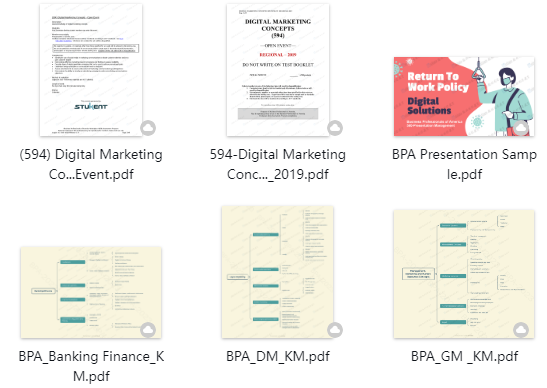
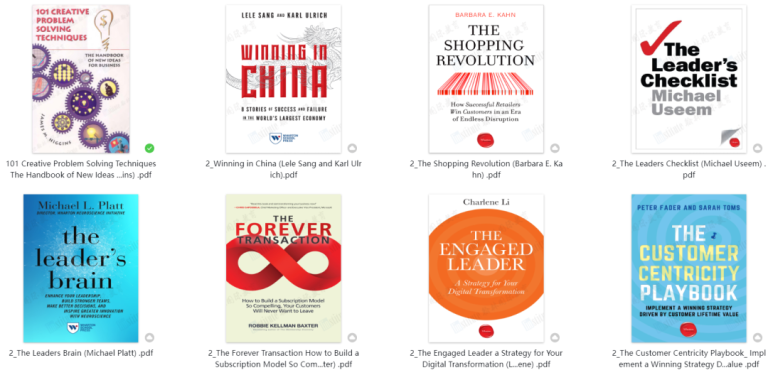
Scan the QR code to get free exclusive CBPA preparation materials & reading list, plus consultation on team formation & customized courses!